Introduction
Building qualified pipeline is hard for B2B SaaS companies. Markets are crowded, buying groups are large, and boards want recurring-revenue growth on a predictable schedule.
Gartner found buying groups of 5 to 16 people across as many as four functions, and 74% showed unhealthy conflict during the decision process. One contact name won't survive that.
Real lead generation connects ICP targeting, relevant messaging, qualification, outreach, nurturing, and sales handoff. This article compares five US-available options:
- TopLead for outsourced appointment setting
- Apollo for outbound prospecting
- HubSpot for inbound capture
- 6sense for account intelligence
- Intercom for conversational engagement
Key Takeaways
- The best option depends on your sales motion, target accounts, team capacity, budget, and desired outcome.
- Verified decision-makers and clear qualification rules beat a large contact database.
- Check CRM integration, reporting, compliance, and contract flexibility before signing.
- Mixing inbound, outbound, and account-based channels builds a sturdier pipeline.
- Judge cost by qualified opportunities, not raw leads.
Overview of B2B SaaS Lead Generation in the US Market
B2B SaaS lead generation is the process of identifying, attracting, qualifying, and converting organizations or decision-makers who may buy subscription software.
It differs from other B2B selling in a few ways:
- The product is intangible, so buyers rely on demos, trials, and freemium use to evaluate it
- Recurring-revenue economics make payback period and retention matter as much as the first sale
- Several stakeholders, often including technical reviewers, weigh in
- Marketing activity has to be tied to pipeline, not just form fills
Buyers also decide early. In 6sense's 2025 buyer study, 94% of buying groups ranked their shortlist before speaking with sellers, and the first vendor contacted won about 80% of deals. The study is global and not limited to SaaS, but the lesson holds: show up during independent research.

The options below mix software platforms and an outsourced service. Judge each against your go-to-market model rather than hunting for one universal winner.
Best B2B SaaS Lead Generation Providers and Platforms in the US
We scored each option on :
- Buyer reach
- Lead or appointment quality
- Channel capability and qualification depth
- Integrations and reporting
- Scalability, pricing transparency, and fit for growth stage
TopLead
TopLead is a US-based B2B lead generation agency in Northern California. It has over 15 years of experience and has arranged more than 25,000 appointments, serving technology and SaaS companies among other B2B industries.
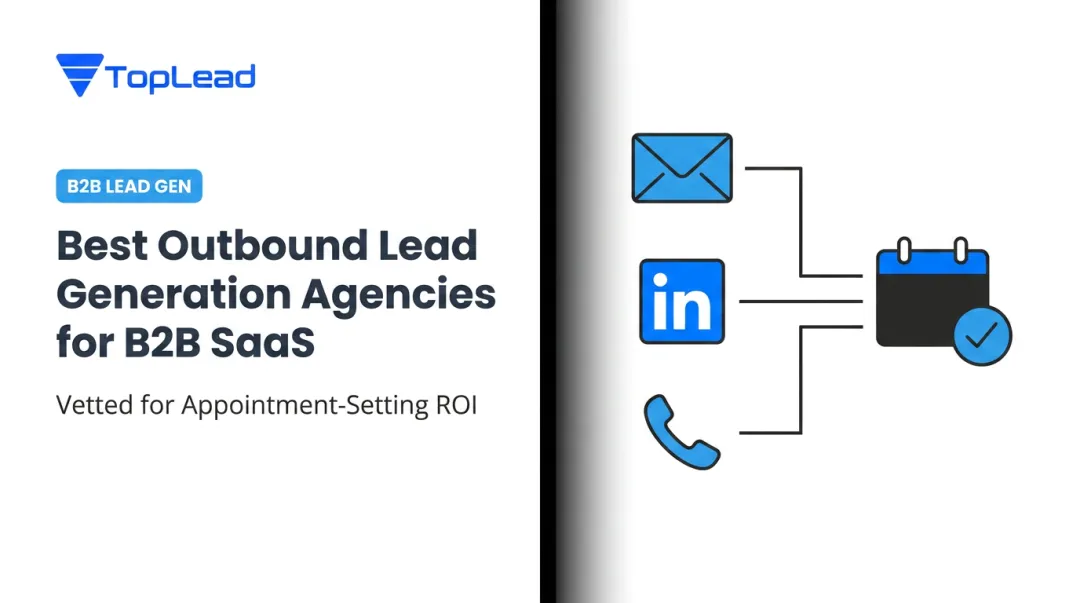
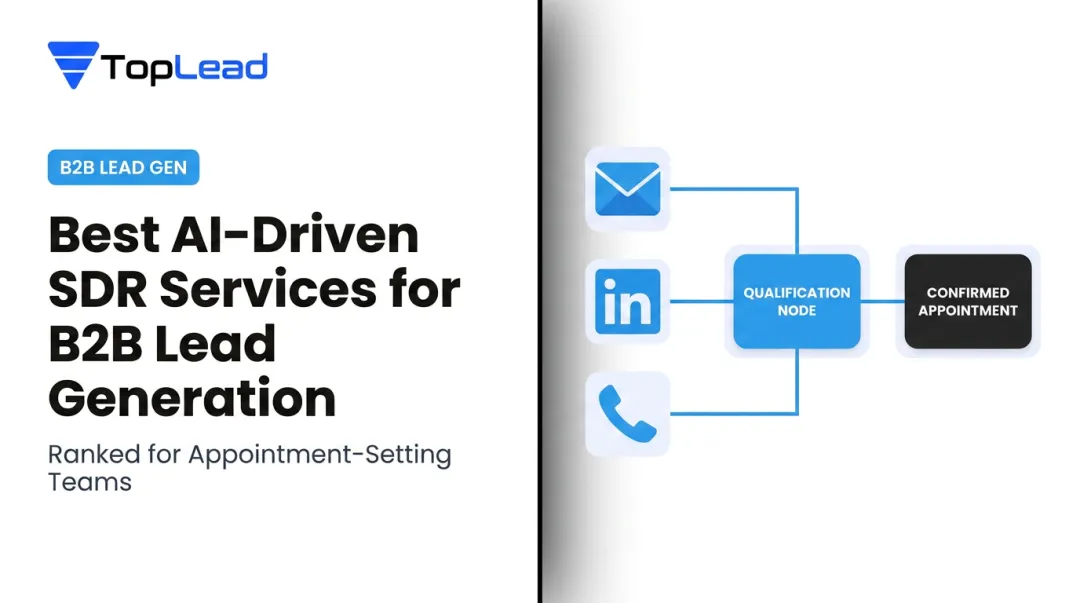
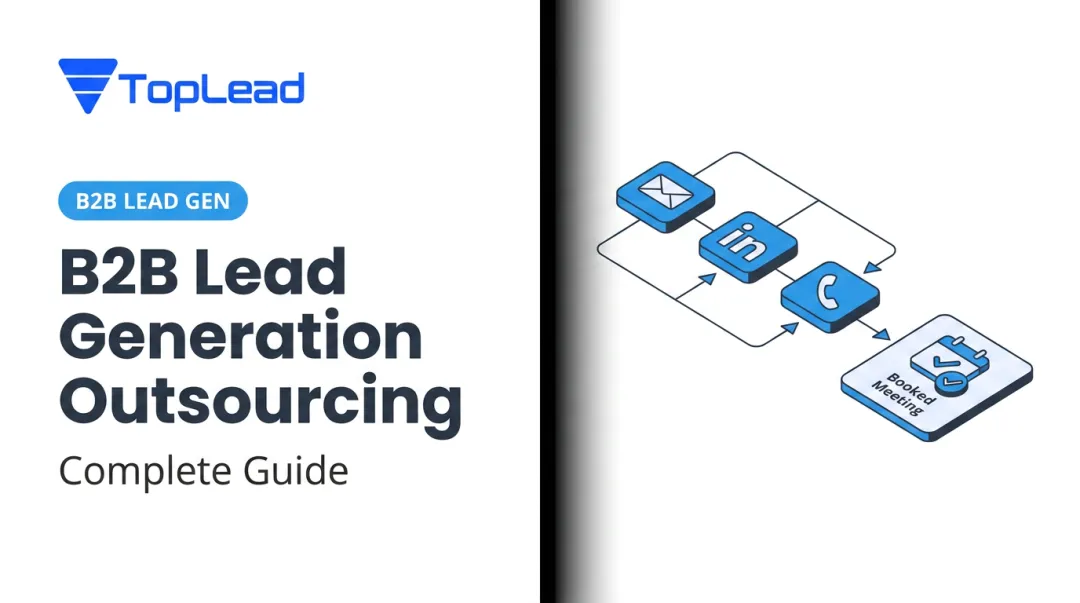
It suits SaaS teams that need execution, not another tool to manage. The service covers decision-maker verification, outreach across email, LinkedIn, and phone, real-time appointment booking, CRM integration, and transparent reporting, all on a pay-per-appointment model.
Its SaaS Growth Campaign delivered 5 qualified leads per month at $310 per lead over a four-month sales cycle, using email, LinkedIn, and phone for mid-sized SaaS companies selling sales enablement tools.
| Details | |
|---|---|
| Best fit | SaaS companies wanting an outsourced SDR or appointment-setting function so their sales team can focus on closing |
| Delivery and commercial model | 3-6 month campaign lifecycle, 4-6 qualified leads per month, pay-per-appointment, typical cost of $300-$350 per qualified lead, reschedule or replacement if a prospect cancels or no-shows |
| Selection considerations | Confirm the qualified-appointment definition, decision-maker criteria, CRM handoff, reporting cadence, campaign responsibilities, and whether the no-long-term-contract terms fit your situation |
Apollo
Apollo is a prospecting and sales-engagement platform. It combines contact and company discovery with enrichment, sequencing, outreach automation, and sales workflows. Its product page claims 240M+ contacts and 30M+ accounts, plus 65+ prospecting filters.
It fits founder-led outbound and growing SDR teams that want to build lists, segment accounts, and run multi-step outreach from one system. Its Free plan has no time limit, but credits are pooled by team and don't roll over.
| Details | |
|---|---|
| Best fit | Early-stage or scaling SaaS teams with internal sales capacity that need prospecting, enrichment, and sequencing |
| Capabilities to verify | Database coverage, firmographic and technographic filters, email verification, phone and LinkedIn workflows, AI features, CRM integrations, deliverability controls |
| Selection considerations | Apollo's own pages cite different accuracy figures (98% on one, 96% on another), so test data quality on your ICP. Review pricing, credit limits, compliance controls, and who handles qualification and follow-up |
HubSpot
HubSpot is an inbound-oriented CRM and marketing platform. It captures, scores, nurtures, and routes leads through forms, landing pages, live chat, email, and automation, with a marketplace of over 2,000 apps.
It works well for SaaS companies that generate demand through content, SEO, webinars, free trials, or demos and want marketing and sales data in one CRM.
| Details | |
|---|---|
| Best fit | SaaS companies with an inbound or product-led motion needing lead capture, lifecycle management, nurturing, and CRM reporting |
| Capabilities to verify | Forms and landing pages, lead scoring, workflows, chat, attribution, sales handoff, integrations, plan limits |
| Selection considerations | Total cost climbs fast. Public pricing showed Marketing Hub Professional from $800 per month plus a $3,000 required onboarding fee. Confirm live pricing, implementation effort, and whether your team can maintain the system |
6sense
6sense is an account-based marketing and revenue-intelligence platform. It combines first- and third-party intent data, account identification, buying-group insight, predictive stage scores, and ad orchestration, and it integrates with CRM and sales tools.
It suits mid-market and enterprise SaaS with high contract values, complex buying committees, and defined target-account lists. Spotting in-market accounts early helps sales prioritize the right accounts when deal sizes are high and buying groups are complex.
| Details | |
|---|---|
| Best fit | Enterprise or account-based SaaS teams needing intent data, journey-stage insight, and coordinated marketing and sales activation |
| Capabilities to verify | Intent-source coverage, buying-group identification, predictive scoring, ad orchestration, CRM sync, attribution, implementation support |
| Selection considerations | No public list price; buyers book a demo. Onboarding needs a customer-side administrator and system mapping, with no standard timeline published. Ask how intent signals are validated before sales follows up |
Intercom
Intercom is a conversational engagement platform. Its Messenger, live chat, Fin AI Agent, and in-app messages can engage and qualify website and product visitors. Fin for Sales sends lead details to connected CRMs, including Salesforce, HubSpot, and Attio.
It's useful for product-led or self-serve SaaS companies that want to catch high-intent visitors at the moment of interest and route them to sales.
| Details | |
|---|---|
| Best fit | SaaS companies with meaningful site or in-product traffic needing real-time engagement, automated qualification, and fast routing |
| Capabilities to verify | Chatbot and live-chat features, visitor targeting, in-app messaging, qualification workflows, CRM integrations, reporting, human handoff |
| Selection considerations | Pricing is seat-based plus usage; Fin starts at $0.99 per outcome. Check seat and contact limits, automation quality, data permissions, and whether chats turn into qualified pipeline rather than just chat volume |

How We Chose the Best B2B SaaS Lead Generation Providers and Platforms
These options deliver different things: software that equips an internal team, intelligence that prioritizes accounts, or a service that books meetings. We compared them by the outcome each produces.
Lead quality
- ICP alignment and relevant company and contact data
- Decision-maker verification and qualification questions
- Sales acceptance, appointment attendance, and a documented handoff
Raw contact volume isn't pipeline. Norwest's 2024 survey found 86% of B2B leaders still rely on MQLs to some degree, which shows how common volume-based thinking remains.
Channel and execution fit
Channels fit different motions:
- Inbound capture and conversational tools suit product-led SaaS with steady traffic
- Outbound email, phone, and LinkedIn suit teams chasing a defined ICP
- Intent data and ABM suit high-ACV deals with buying committees
- Referrals help everywhere, but they don't scale on demand
Business and operational fit
- CRM and marketing-automation integrations
- Attribution reporting and campaign optimization
- Compliance and suppression processes (CAN-SPAM has no B2B exception, and phone outreach still involves TCPA rules)
- Onboarding effort, internal workload, and scalability
- Pricing structure, contract terms, and replacement policies
Validate before you buy
Before you commit:
- Check current pricing pages, request demos, and read customer reviews
- Call references and ask for case studies tied to qualified opportunities, meetings, and conversion
- Skip vanity metrics; public MQL-to-SQL and cost-per-opportunity benchmarks are scarce
Your own pilot data matters most.

Conclusion
The best approach matches your ICP, sales cycle, team capacity, buyer journey, and definition of a qualified opportunity. Having the most features or the biggest database doesn't make a winner.
Run a small pilot with a defined evaluation period. Agree on qualification criteria, CRM tracking, sales-acceptance rules, and pipeline metrics before you start.
If your team wants help reaching verified decision-makers and turning prospecting into qualified appointments, review TopLead's US-based, pay-per-appointment model and see whether its outreach and reporting fit your goals.
Frequently Asked Questions
What is B2B SaaS lead generation?
It's the process of identifying, attracting, qualifying, nurturing, and converting business buyers for subscription software. A qualified opportunity involves a verified buyer with real interest, which an unverified contact list does not.
Which lead generation channels work best for B2B SaaS companies?
Content and SEO, free trials or demos, outbound email and calling, LinkedIn, referrals, communities, chat tools, and ABM all work. Fit depends on your ICP and sales motion.
How do I choose the best B2B SaaS lead generation provider?
Compare ICP expertise, qualification standards, decision-maker access, channel execution, integrations, reporting, pricing, contract terms, compliance, and evidence of pipeline quality.
Are lead generation agencies better than software tools?
Agencies provide people, process, and execution. Software provides infrastructure for a team you already have. Weigh internal capacity, control, speed, cost, and whether you want tools or booked meetings.
How can SaaS companies measure lead quality and ROI?
Track sales acceptance, appointment attendance, opportunity creation, conversion rate, sales-cycle movement, customer acquisition cost, and pipeline or revenue contribution. Benchmarkit reported a median new-CAC ratio of $2 spent per $1 of new ARR in 2024.
How long does B2B SaaS lead generation take to produce results?
It varies with ICP clarity, channel, offer, data quality, and sales cycle. Surveys report median SaaS cycles around six months, so set early activity benchmarks and later pipeline and revenue benchmarks instead of expecting one timeline.