The distinction matters even more in longer-cycle B2B sales. According to Dreamdata's 2024 GTM benchmarks, the average B2B customer journey from first touch to closed-won is 192 days, with an average of 6.3 stakeholders involved in each decision. In that environment, who qualifies leads and how well they do it has a direct effect on whether your pipeline converts.
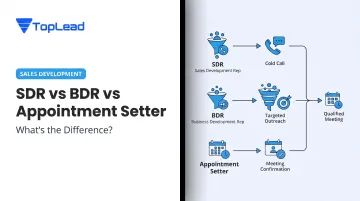
This article breaks down all three roles — what they actually do, where they fit, and which one your business needs based on your sales motion.
Key Takeaways
- SDRs handle inbound lead qualification — converting marketing-generated interest into scheduled sales conversations
- BDRs own cold outbound prospecting — building pipeline from scratch in accounts with no prior relationship
- Appointment setters focus narrowly on booking qualified meetings — a function performed by SDRs, BDRs, or outsourced teams
- All three roles sit at the top of the funnel — none of them close deals
- The right choice depends on your pipeline mix — inbound, outbound, or a need to scale fast without hiring overhead
SDR vs BDR vs Appointment Setter: A Quick Comparison
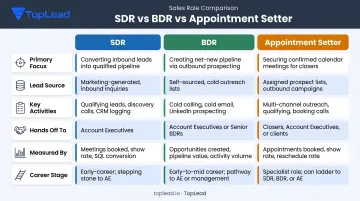
Before diving into each role individually, here's how they stack up across the dimensions that matter most for hiring and pipeline planning:
| Dimension | SDR | BDR | Appointment Setter |
|---|---|---|---|
| Primary focus | Inbound lead qualification | Outbound cold prospecting | Booking qualified meetings |
| Lead source | Marketing-generated (MQLs) | Cold accounts, no prior contact | Varies — both inbound and outbound |
| Key activities | Speed-to-lead follow-up, qualification, discovery scheduling | Cold email, cold calling, LinkedIn, account research | Qualification verification, calendar booking |
| Hands off to | Account Executive | Account Executive | Closer or AE |
| Measured by | SQLs created, meetings held, response time | Meetings booked, pipeline sourced, connect rate | Appointments booked and held |
| Career stage | Entry to mid-level | Mid-level (often more experienced than inbound SDR) | Junior to mid-level |
Where the Lines Blur
In early-stage and smaller companies, these roles frequently collapse into one person. A single rep might handle inbound follow-up in the morning, run cold outreach sequences in the afternoon, and book their own meetings throughout the day. The title on the business card matters far less than whether the underlying responsibilities are clearly scoped and owned.
In growth-stage and enterprise organizations, the roles separate. SDRs own inbound, BDRs own outbound, and appointment setting becomes either a specialized function or is outsourced entirely.
One caveat worth noting: Salesforce notes that BDR and SDR titles are often used interchangeably, with some organizations assigning inbound pre-sales to BDRs and cold calling to SDRs. Before hiring or restructuring, check the job description, not just the title.
What Is an SDR (Sales Development Representative)?
An SDR is responsible for the early stages of the sales funnel, handling inbound leads generated by marketing — demo requests, content downloads, webinar sign-ups — and qualifying them before handing off to an account executive.
The role is built around speed and precision. When someone raises their hand through your marketing, an SDR's job is to respond fast, qualify thoroughly, and get the right people on a call with an AE.
Why Speed-to-Lead Matters More Than Most Teams Realize
The data on response time is striking. InsideSales research across 5.7 million inbound leads found that conversion rates are 8x higher when leads are contacted within the first 5 minutes. Yet only 0.1% of leads receive a response that quickly, and 57.1% of first contact attempts happen more than a week after the inquiry.
SDRs exist to close that gap — responding before interest fades and the lead moves on to a competitor.
Core SDR Activities
- Responding to inbound inquiries within defined SLA windows
- Qualifying prospects against ICP criteria (company size, industry, role, timing, budget)
- Identifying and confirming decision-maker authority
- Scheduling discovery calls or product demos for AEs
- Updating CRM with qualification notes and lead status
When SDRs Make the Most Sense
SDRs are most effective when a company already has a functioning inbound marketing engine generating consistent lead volume. This is common among American SaaS, technology, and professional services firms running content marketing or paid acquisition programs.
If leads are coming in but not being followed up quickly enough — or AEs are spending time qualifying instead of closing — an SDR layer directly plugs that gap.
What Is a BDR (Business Development Representative)?
A BDR is an outbound-focused role responsible for cold prospecting into target accounts with no prior relationship. SDRs respond to existing interest — BDRs go out and generate it from scratch.
This is pipeline built from scratch — through cold email, cold calling, and LinkedIn outreach — against accounts that have never heard of your company.
What Cold Outreach Actually Looks Like at Scale
The numbers from outbound activity are sobering but instructive. Gong's analysis of 300 million+ cold calls found that average reps connect with 5.4% of prospects, while top-quartile reps reach 13.3%. At 800 dials per month, average reps book 2 meetings — top performers book 18.
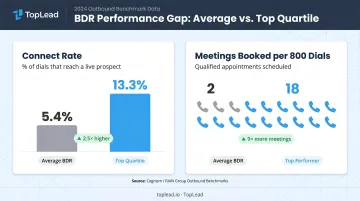
Outbound volume matters, but execution quality matters more. BDR performance varies dramatically based on how well reps research, personalize, and handle objections — not just how many dials they log.
Core BDR Activities
- Researching and building targeted account lists based on ICP
- Crafting personalized, multi-touch outreach sequences
- Navigating gatekeepers to reach actual decision-makers
- Handling early objections in cold conversations
- Booking initial discovery calls for AEs
When BDRs Make the Most Sense
BDRs deliver the most value when:
- Entering new markets or account segments with no existing brand awareness
- Running primarily outbound pipeline rather than relying on inbound leads
- Selling into verticals like financial services, insurance, PEO/HR, or manufacturing — where digital inbound is thin and deals are built through direct outreach
What Is an Appointment Setter?
An appointment setter is a role — or function — whose primary objective is booking qualified meetings between a prospect and a closer or account executive. The scope is narrower than a full SDR or BDR, focused specifically on the scheduling outcome rather than nurturing leads through earlier pipeline stages.
Some sales professionals find the title reductive, and the criticism isn't entirely wrong. A skilled appointment setter does far more than click "send meeting invite." They verify decision-maker authority, qualify basic fit against the client's ICP, handle initial objections, and protect the AE's calendar from unqualified conversations. The output is a held, qualified meeting — not just a calendar entry.
In-House vs. Outsourced Appointment Setting
Two delivery models exist, and they suit different company situations:
In-house appointment setters are hired as junior SDRs or standalone specialists. They offer more control over messaging and training, but they require recruiting, ramp time, and management overhead. Bridge Group data puts SDR ramp time at roughly 3 months to baseline productivity, with historical attrition rates running 40–50% annually — meaning this function needs to be rebuilt regularly.
Outsourced appointment setting provides a team, playbook, and multi-channel outreach infrastructure without recruiting or ramp-up costs. This model is growing — the outsourced SDR services market was estimated at over $2 billion in 2024 — because it solves the speed problem. Companies get meetings on the calendar in weeks, not months.
How TopLead Functions as a Virtual SDR Team
TopLead operates as a U.S.-based outsourced appointment-setting agency on a pay-per-appointment model with a reschedule or replacement guarantee. Clients only pay for confirmed, qualified meetings — if a prospect cancels or no-shows, TopLead reschedules or replaces at no additional cost.
The full prospecting function includes:
- ICP development and target list building
- Multi-channel outreach across email, phone, and LinkedIn
- Decision-maker verification before every booking
- Real-time calendar delivery and CRM integration
With over 25,000 appointments set across financial services, insurance, SaaS, PEO/HR, and accounting, the track record spans the verticals where outbound pipeline matters most.
For US RIAs, insurance agencies, and CPA firms — where AEs are often doing their own prospecting — this model delivers the output of a trained appointment-setting function without the recruiting cost or ramp risk of building it in-house.
Which Role Does Your Business Need?
Rather than debating titles, the right question is: what does my pipeline actually need right now?
Choose an Inbound SDR Function If:
- Your marketing engine generates consistent MQL volume
- Inbound leads aren't being followed up fast enough
- AEs are spending time qualifying prospects instead of closing
Choose a BDR Function If:
- You're doing primarily outbound prospecting into cold accounts
- You're entering new verticals, geographies, or segments
- Pipeline needs to be built independently of marketing
Choose Outsourced Appointment Setting If:
- You need pipeline in weeks, not months
- Your team is lean and AEs are doing their own prospecting
- You want predictable meeting volume with decision-maker verification, without the hiring and ramp cycle
That last point matters more than most teams realize. Salesforce research found that sales reps spend only 28% of their week actually selling — the rest goes to administrative and prospecting work. For companies where AEs are self-sourcing, outsourcing the appointment-setting function wins that time back immediately.
In-House SDR vs. Outsourced Appointment Setting: The Numbers
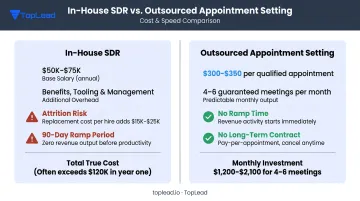
Hiring an in-house SDR typically runs $50,000–$75,000 in base salary (per Betts Recruiting's 2024 benchmarks), plus benefits, tooling, management time, and a 90-day ramp before they're consistently productive. If they leave — and attrition in SDR roles is high — the pipeline gaps and restart costs add up.
Outsourced models work differently. TopLead's model averages $300–$350 per qualified appointment, with a guaranteed minimum of 4–6 qualified meetings per month. For lean teams that need predictable pipeline without building the infrastructure from scratch, that math usually favors outsourcing.
Frequently Asked Questions
What is an SDR appointment setter?
The term typically refers to an SDR whose primary measured output is booked meetings. While all SDRs set appointments as part of their work, a dedicated appointment setter focuses almost exclusively on that scheduling outcome rather than broader qualification or nurturing activities.
What is the difference between an appointment setter and an SDR?
An SDR typically handles a broader set of responsibilities: lead qualification, ICP research, nurturing, and CRM updates. An appointment setter is more narrowly focused on booking meetings. In many companies, especially smaller ones, the two functions overlap significantly or are handled by the same person.
Is SDR an entry-level position?
Generally, yes — SDR is considered an entry-to-mid-level role and is a common training ground for account executives. Inbound SDRs tend to be earlier career, while senior BDR roles handling complex outbound accounts can command more experience and higher compensation.
What does a BDR do differently than an SDR?
BDRs focus on cold outbound prospecting to accounts with no prior engagement; SDRs typically handle warmer inbound leads. BDRs build pipeline from scratch, often working closely with a defined set of AEs on targeted account strategies rather than responding to marketing-generated volume.
Should I hire an in-house SDR or outsource appointment setting?
Hiring in-house offers more control over messaging and training, but requires 3–6 months to ramp a consistent performer. Outsourcing delivers faster time-to-pipeline, lower upfront cost, and built-in expertise — a practical fit for teams that need qualified meetings quickly without the overhead of building an SDR function from scratch.
How are SDRs and BDRs typically compensated?
Both roles use base salary plus variable pay. Per RepVue's data from over 8,700 verified submissions, U.S. SDR median base is $60,000 with an $85,000 OTE. BDR compensation runs higher given the demands of cold outbound — Glassdoor reports average total BDR pay around $121,000, though figures vary by market and industry.